Friday, September 23, 2011

Livres à lire d’une seule main

Reference Book of the Day:
Aristotle’s Master-Piece

[The beginning of the semester, with all the usual attendant craziness, has kept me from this blog for the last two weeks. But now I can get back to it, albeit probably not daily. Ill make up for the long silence by serving up a particularly juicy one today.]

Aristotle’s Master-Piece; or, The Secrets of Generation Display’d in All the Parts Thereof: Containing 1. The Signs of Barrenness. 2. The Way of Getting a Boy or Girl. 3. Of the Likeness of Children to Parents. 4. Of the Infusion of the Soul into the Infant. 5. Of Monstruous Births, and the Reasons Thereof. 6. Of the Benefit of Marriage to Both Sexes. 7. The Prejudice of Unequal Matches. 8. The Discovery of Insufficiency. 9. The Cause and Cure of the Green Sickness. 10. A Discourse of Virginity. 11. How a Midwife Ought to Be Qualified. 12. Directions and Cautions to Midwives. 13. Of the Organs of Generation in Women. 14. The Fabrick of the Womb. 15. The Use and Action of the Genitals. 16. Signs of Conception, and Whether of a Male or Female. 17. To Discover False Conception. 18. Instructions for Women with Child. 19. For Preventing Miscarriage. 20. For Women in Child-Bed ... To Which Is Added, a Word of Advice to Both Sexes in the Act of Copulation, and the Pictures of Several Monstrous Births: Very Necessary for All Midwives, Nurses, and Young-Married Women. London, 1690.

Probably the most notorious seventeenth-century sex manual bore the strange title Aristotle’s Masterpiece. This book bears a fake author’s name — the Greek philosopher had nothing to do with it — in order to give the work some measure of respectability. The ruse didn’t work; Aristotle’s Masterpiece was banned in Britain until the 1960s. But the prohibition didn’t keep it from circulating: it was one of the most notorious, and widely distributed, sex books in the English language.

The long title page gives little idea of the contents. True, the promised “pictures of several monstrous births” offers a kind of prurient glance at gruesome birth defects. But the book was notorious for other reasons. It wasn’t marketed to midwives, and “nurses and young-married women” were not the real audience. Much of the book was read as pornography, pure and simple.

From a twenty-first-century point of view, the seventeenth-century pornography doesn’t always seem very pornographic. In fact Aristotle’s Masterpiece sometimes reads more like a sermon than a sex guide. “It plainly appears in Holy Writ,” the book declares, “that this glorious Vniverse, bespangled with gaudy Fires, and every where adorned with wonderful objects, proclaiming the Wisdom and Omnipotence of the Great Work-Master, who in Six Days Erected all Things for his Pleasure.” Maybe erected is a dirty pun, but the sentiment is wholesome enough, and the point is that God created sex for humanity’s pleasure — not a heretical belief, but one embraced by the Puritans themselves in seventeenth-century England. “That Marriage is an Honourable State,” writes the author, “ordained by God in Paradice, and since Confirmed by our Blessed Saviour, who wrought his first Miracle at a Wedding, I hope none will deny; therefore it is convenient that Parents well take care of their Daughters Chastity.” No need to blush there.

But once the book gets going, there’s little doubt that the book would be categorized as what Jean-Jacques Rousseau called a “livre à lire dune seule main,” a “book to be read with one hand.” In fact its very popularity makes it difficult to study today. We’re not even certain when the first edition was printed; few copies of the early editions survive, since most of them have been read (and, no doubt, otherwise used) until they fell apart.


This is one that can be read online: an electronic edition includes plain text, HTML, and PDF versions.

Sunday, September 4, 2011

Admirable Artifice

Reference Book of the Day:
Napier, Mirifici logarithmorum

Napier, John. Mirifici logarithmorum canonis descriptio ejusque usus, in utraque trigonometria; ut etiam in omni logistica mathematica, amplissimi, facillimi, & expeditissimi explicatio: Authore ac inventore, Ioanne Nepero, Barone Merchistonii, &c. Scoto. Edinburgh, 1614.

Rockin' title-page, huh?
John Napier discovered the logarithm — at least, he was one of several in the early seventeenth century to understand the principles behind logarithms, and the first to publish the fruits of his research in Mirifici logarithmorum.

It's not easy to understand what Napier is saying, and that's not only because (a) it's about logarithms and (b) it's in Latin. No; we also have to reckon with the fact that (c) his definitions aren't at all intuitive for those who've learned modern definitions of exponentiation and logarithms. His definition, for instance, is geometric, not algebraic:
Linea æqualiter crescere dicitur, quum punctus eam describens, æqualibus momentia per æqualia intervalla progreditur.
It comes with a diagram:
And as one historian describes it,
Logarithms, as Napier first understood them, and even logarithms in the later from agreed upon by him and Briggs, did not appear to their inventor in the light in which we now regard them. The modern exponential notation an was not yet invented, and it was not for more than a hundred years that the idea of a logarithm as the index of the power of the base found a place in works on algebra. Indeed, in the original system of Napier, there is no mention of a base system at all; and in the modified and improved system, though as a matter of fact it does in a sense consist of logarithms to the base 10, no stress is laid upon that point. (Carslaw, “The Discovery of Logarithms,” p. 77)
He also doesn't use the base-10 logarithms that are familiar to those who care about such things today. (Shortly after he published his book, he realized base-10 logs were a better idea, and he published several follow-ups.)

After a theoretical discussion of this new kind of number, he devotes eighty-eight pages to his table:

It seems exceedingly obscure, but Napier's discovery in pure mathematics was absolutely crucial for advances in applied math for centuries to come. As Edmund Wingate put it in Logarithmotechnia; or, The Construction, and Use of the Logarithmeticall Tables (1635),
For as much as amongst many inventions, that concerne the Mathematicks, none can be found comparable to this of the Logarithmes, the worthy labours of those Learned men which have endevoured [sic] to advance it, are to be prized accordingly.
Pierre-Simon Laplace, the nineteenth-century French mathematician and astronomer, marveled at this “admirable artifice which, by reducing to a few days the labour of many months, doubles the life of the astronomer, and spares him the errors and disgust inseparable from long calculations.” A nineteenth-century book on logarithms makes their labor-saving value clear: “This method,” James Mill Peirce writes, “has contributed very powerfully to the modern advance of science, and especially of astronomy, by facilitating the laborious calculations without which that advance could not have been made.”

The Mirifici gives the logs of integers up to 1,000 to eight decimal places; he left it to his successor, Henry Briggs, to work out 30,000 more logarithms to fourteen decimal places: if you're dying to read that, ask your local bookseller to order Arithmetica logarithmica sive Logarithmorum chiliades triginta, pro numeris naturali serie crescentibus ab unitate ad 20,000: et a 90,000 ad 100,000 Quorum ope multa perficiuntur arithmetica problemata et geometrica. Hos numeros primus invenit clarissimus vir Iohannes Neperus baro Merchistonij: eos autem ex eiusdem sententia mutavit, eorumque ortum et vsum illustravit Henricus Briggius, in celeberrima Academia Oxoniensi geometriae professor Savilianus (1624).

Or you can wait for the movie.


The best short introduction is an article: H. S. Carslaw, “The Discovery of Logarithms by Napier,” The Mathematical Gazette 8, no. 117 (May 1915): 76–84; no. 118 (July 1915): 115–19. Even more accessible is Jack Oliver, “The Birth of Logarithms,” Mathematics in School 29, no. 5 (Nov. 2000): 9–13. Serious, hard-core geeks, though, will want to work their way through the whole of M. Campbell-Kelly, M. Croarken, R. Flood, and E. Robson, eds., The History of Mathematical Tables: From Sumer to Spreadsheets (Oxford: Oxford Univ. Press, 2003). I've not only read it, but have taken ten single-spaced typed pages of notes, just to ensure my nerd credentials are beyond question.

Saturday, September 3, 2011

Erya

Reference Book of the Day:
Erya

The Erya (or Erh Ya) — the name means “approaching what is correct, proper, refined,” though it's sometimes translated as The Ready Guide — is the oldest dictionary of the Chinese language. The author is a mystery, and the traditional attribution to the Duke of Chou isn't taken seriously. The date, too, is a puzzler, though “scholars generally agree that it was written by Confucian scholars sometime between the Spring and Autumn period and early Han Dynasty (8th through 2nd centuries B.C.)” (Xue, p. 152). The third century BCE is a pretty good guess.

Erya contains glosses on just over 4,300 words drawn from pre–Qin Dynasty Chinese literature. It's hard to make reliable claims about works this old, but some have called it the first-ever monolingual dictionary in the world. It originally had twenty chapters, though only nineteen survive.

Chinese lacks an alphabet; the logographical system doesn’t have any obvious order. For a long time, Chinese dictionaries have been ordered according to the “radicals” of the Chinese characters, making it possible (though hardly easy) to find them in a reference book. When the Erya was compiled, though, that system had not yet been developed, so the anonymous creator organized his work by subject. This places the work in a middle ground between a dictionary, a thesaurus, and an encyclopedia. The first three chapters cover "common words" (verbs and grammatical function words), and chapters 4 through 19 define words from specialized areas: tools, plants, animals, kinship, the calendar, and so on.

Typical entries (I can't vouch for the diacritical marks, I'm afraid):
A woman calls her husband’s father jìu, and her husband’s mother . While alive they are called jūnjìu and jūngū. after their death they are called xiānjìu and xiāngū.

Water feeding into a stream is called , feeding into a is called , feeding into a is called gōu, feeding into a gōu is called kùai, feeding into a kùai is called .

The fèi fèi (baboon) looks like a human being. It has dishevelled hair, walks rapidly and eats humans. (Xue, p. 153)
National Palace Museum, Taiwan
The Erya's shortcomings — it's a fascinating book, but not especially useful as a practical reference — led to a series of commentaries over many centuries, including Guo Pu's Erya Zhu (Annotations on Erya, early fourth century), Xing Bing's Erya Shu (Explanations of Annotations on Erya, late tenth or early eleventh century), and Hao Yixing's  Erya Zhengyi (Meaning Verification of Erya, late eighteenth century).

During the Song Dynasty (960–1279), Erya was named one of the Thirteen Confucian Classics.


Some readings: Xue Shiqui, “Chinese Lexicography Past and Present,” Dictionaries 4 (1982): 151–69; Endymion Porter Wilkinson, Chinese History: A Manual, rev. ed. (Cambridge, Mass.: Harvard Univ. Asia Center, 2000); and Heming Yong and Jing Peng, Chinese Lexicography: A History from 1046 BC to AD 1911 (Oxford: Oxford Univ. Press, 2008).

Friday, September 2, 2011

I Wish I Knew Dutch

Reference Book of the Day:
Komrij’s kakafonie

Komrij, Gerrit, ed. Komrij’s kakafonie, oftewel Encyclopedie van de stront: omvattende de symbolische waarde, de kont, het kakken, de kleur, de stank, de wind, het sanitair, de liefhebbers, satire & nonsens, stront en het boek, lexicografie, enz. enz. Amsterdam: De Bezige Bij, 2006.

I am, alas, Dutchless. But, from what I can piece together, the title means Komrij’s Cacaphony; or, Encyclopedia of Shit: Comprising Its Symbolic Value, the Ass, Shitting, Color, Smell, Farting, Toilets, Enthusiasts, Satire and Nonsense, Shit and the Book, Lexicography, etc., etc. (Don’t miss the pun on caca in kakaphony.)

It is, if you can believe it, the only book to which the Library of Congress has so far seen fit to award the subject headings Defecation — Encyclopedias, Feces — Encyclopedias, and Toilets — Encyclopedias. (I love the fact that the LoC Cataloging in Publication folks, after careful consideration, decided they needed separate headings for defecation and feces.)

Shockingly, the book is not easily available in the good ol’ US of A, which means I probably won’t get my hands on it. And even if I did, well, I don’t read Dutch. I’ll just have to lament what might have been.

Meanwhile, I beg my Batavophone readers to get to work immediately on an English translation of this work. The lack of an English version is one of the greatest injustices facing the modern world.

Never let it be said this investigation of reference books is anything less than a highbrow intellectual endeavor.

Thursday, September 1, 2011

Titles

Some miscellaneous reference books I haven’t seen, and about which I know nothing more than their titles — but what lovely titles they are:
  • Encyclopedia of Brazilian Jiu-Jitsu
  • A Dictionary of the Language of Mota, Sugarloaf Island, Banks’ Islands, with a Short Grammar and Index
  • Encyclopedia of Death 
  • A Dictionary of Sexist Quotations
  • Encyclopedia of Heavy Metal, with a foreword by Ronnie James Dio
  • Atlas of Northwestern Elevators
  • Encyclopedia of Conditioning Rinse Ingredients
  • Arkheologicheskii slovar kamennykh orudii (Archaeological Dictionary of Stone Tools
  • Dung Fungi: An Illustrated Guide to Coprophilous Fungi in New Zealand
  • Encyclopedia of Murder & Violent Crime 
  • Les seins: Encyclopédie historique et bizarre des gorges, mamelles, poitrines, pis et autres tétons: Des origines à nos jours (Breasts: A Strange and Historical Encyclopedia of Boobs, Mammaries, Chests, Breasts, and Nipples: From the Beginnings to Today)
  • Foolish Dictionary: An Exhausting Work of Reference to Un-Certain English Words, Their Origin, Meaning, Legitimate and Illegitimate Use, Confused by a Few Pictures, Executed by Gideon Wurdz
  • Encyclopedia Horrifica: The Terrifying Truth! about Vampires, Ghosts, Monsters, and More
  • Talkin’ that talk: Le langage du blues et du jazz 
  • 1001 Wörter Lkw-Werkstatt: Deutsch, English, français, ʻArabi (1001 Words for Truck Workshop)
  • Precancelled Envelopes of the United States
  • The Zombie Dictionary (included in  Zombie Code: Keys to Unlocking Your Undead Destiny)
  • Atlas of Hair and Scalp Diseases
  • 6-sprachiges Süsswarenfachwörterbuch (Six-Language Technical Dictionary of the Confectionery Industry)
Oh, had we but world enough and time!

Wednesday, August 31, 2011

Noir

Reference Book of the Day:
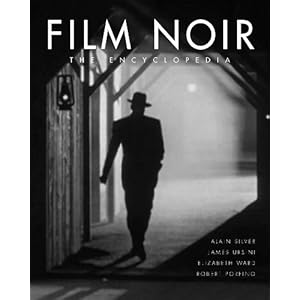
The Film Noir Encyclopedia

Alain Silver, Elizabeth Ward, James Ursini, and Robert Porfirio, The Film Noir Encyclopedia, 4th ed. (New York: Overlook Press, 2010).

I just discovered this book, but how can you not love it? More than 300,000 words on noir, broadly understood. (For those who don't think in word counts, that officially counts as big.) It's a mixture of extended essays on big topics and short entries on individual works, and is extensively illustrated. Makes me want to put on Miles Davis's soundtrack to L'Ascenseur pour l'echafaud in the small hours.


I'm a little surprised that the Library of Congress is missing this work — that means my usual source for publication details has failed me. From what I can make out from other catalogues, the book began in 1979 as Film Noir: An Encyclopedic Reference to the American Style. One of these days I'd be interested to sort through the various editions.

(N.B.: I inadvertently typed "the book began in 1797." Had that been the case, it  would require some serious rethinking of film history.)

Don't confuse it with the Encyclopedia of Film Noir, ed. Geoff Mayer and Brian McDonnell (Westport, Conn.: Greenwood Press, 2007).

Tuesday, August 30, 2011

Beach Reading

Reference Book of the Day: 
The Yongle Encyclopedia

The worst insult you can hurl at academics is to say they haven't even read the books they presume to comment on.

A confession: Not only do I have to admit that there are reference books in here that I haven’t read through; in fact, there are very few works that I have read from cover to cover — or, since many are in multiple volumes, from cover to cover to cover to cover to cover....

One work I haven't read is the Yongle Encyclopedia. I think I have pretty good reasons, though, for not reading it: viz.,
  1. It's very long;
  2. It's in a language I don't read; and
  3. It doesn't actually exist.
The Yongle Encyclopedia (1403–8) has been called the world’s longest reference book. With 11,095 volumes, it’s hard to dispute the claim; the Yonglè Dàdian, or “Great Canon or Vast Documents of the Yongle Era,” required the labors of a team of two thousand scholars. (The length is sometimes given as 11,095 volumes, and sometimes as 11,919. I confess I haven't counted.)

The work was commissioned by Emperor Cheng Zu of the Ming Dynasty; at the time it was completed, the Wen Yuan Pavilion was established to serve as an imperial library. The material was collected from more than 7,000 works of Chinese literature, and the resulting compendium was organized by the sounds of the headwords, grouped under phonetic rhymes. Endymion Porter Wilkinson describes its scope and importance:
Yongle dadian ... 22,877 juan plus 60 juan index and preface; 11,095 ce, completed in 1408. The largest leishu ever compiled in China, with an estimated total of 370 million characters. ... Seven to eight thousand works from the Spring and Autumn period to the early Ming were copied into this imperially sponsored attempt to save for posterity the sum total of all Chinese written knowledge.
The problem with a work in eleven thousand volumes — well, let's say one of the problems with a work in eleven thousand volumes — is that it doesn't lend itself to quick and cheap reproduction in many copies. For a very long time only the handwritten original existed; then a single manuscript copy was made. It proved a valuable source: by the eighteenth century, it was the only surviving version of more than 385 books that had been lost to history.

By by the eighteenth century, though, nearly all of the original manuscript of the encyclopedia had been lost, along with about 10 percent of the copy. And then, in the nineteenth century, European explorers began taking away pieces as souvenirs. By 1900, just 60 of the original 11,095 volumes were left.

There's a scholarly edition of the surviving text in ten folio volumes photolithographic facsimile (1959), even though it amounts to only about 3.5 percent of the original. Chinese scholars have been working through the twentieth and twenty-first centuries to reconstruct the lost encyclopedia. It's not as hopeless a task as it sounds: other works quoted the Yongle Encyclopedia at length, and by going through them patiently it's possible to restore the text of at least parts of the work.

Maybe I'll read it when they've finished.


As you might guess, I've been entirely dependent on secondary sources for this one. The two sources I've found most reliable are Ding Zhigang in Robert Wedgeworth, World Encyclopedia of Library and Information Sciences, 3rd ed. (Chicago: American Library Association, 1993), s.v. China; and Endymion Porter Wilkinson, Chinese History: A Manual, rev. ed. (Cambridge, Mass.: Harvard University Asia Center, 2000).

Monday, August 29, 2011

These Days of Hatlessness

Reference Book of the Day: 
Emily Post's Etiquette

Emily Post, Etiquette in Society, in Business, in Politics and at Home, by Emily Post (Mrs. Price Post) ... Illustrated with Private Photographs and Facsimiles of Social Forms (New York and London, Funk & Wagnalls, 1922).

As Richard Duffy explains in his introduction,
Many who scoff at a book of etiquette would be shocked to hear the least expression of levity touching the Ten Commandments. But the Commandments do not always prevent such virtuous scoffers from dealings with their neighbor of which no gentleman could be capable and retain his claim to the title. ... There is no intention in this remark to intimate that there is any higher rule of life than the Ten Commandments; only it is illuminating as showing the relationship between manners and morals, which is too often overlooked.
That’s what prompted the work of Emily Post — I should say, Mrs. Price Post, since it’s unspeakably vulgar to introduce a woman by her Christian name. In Etiquette in Society, published in 1922, she offers an guide to behavior in “Best Society.”

Don’t accuse her of Old World snobbishness, though. “Our own Best Society,” she writes, “is represented by social groups which have had, since this is America, widest rather than longest association with old world cultivation. Cultivation is always the basic attribute of Best Society.”

We learn valuable lessons right away in chapter one, on how to introduce one person to another — though I see I’ve blundered again by using the word introduce:
The word “present” is preferable on formal occasions to the word “introduce.” ... The correct formal introduction is:

“Mrs. Jones, may I present Mr. Smith?”

or,

“Mr. Distinguished, may I present Mr. Young?”

The younger person is always presented to the older or more distinguished, but a gentleman is always presented to a lady, even though he is an old gentleman of great distinction and the lady a mere slip of a girl.

No lady is ever, except to the President of the United States, a cardinal, or a reigning sovereign, presented to a man.
At least I didn’t commit that most embarrassing introductory faux pas of all: under “Forms of Introduction to Avoid,” the reader is sternly advised, “Do not say: ‘Mr. Jones, shake hands with Mr. Smith,’ or ‘Mrs. Jones, I want to make you acquainted with Mrs. Smith.’ Never say: ‘make you acquainted with’ and do not, in introducing one person to another, call one of them ‘my friend.’ ... Under no circumstances whatsoever say ‘Mr. Smith meet Mrs. Jones,’ or ‘Mrs. Jones meet Mr. Smith.’ Either wording is equally preposterous.” (But of course it is; you didn’t need to be told.)

Curious about “What to Say When Introduced”? This one can be handled in a few words: “Best Society has only one phrase in acknowledgment of an introduction: ‘How do you do?’ It literally accepts no other.”

What about intersex handshake rules? “A gentleman on the street never shakes hands with a lady without first removing his right glove. But at the opera, or at a ball, or if he is usher at a wedding, he keeps his glove on.”

Perhaps you were wondering how to behave in your box at the opera, but I fear the very question marks you as hopelessly déclassé: “New Yorkers of highest fashion almost never occupy a box at the theater. ... A box in these days of hatlessness has nothing to recommend it.”

Post was a careful observer of shibboleths, the verbal habits that mark your class despite your best efforts. “People of position are people of position the world over — and by their speech are most readily known,” she advises. “Appearance on the other hand often passes muster. A ‘show-girl’ may be lovely to look at as she stands in a seemingly unstudied position and in perfect clothes. But let her say ‘My Gawd!’ or ‘Wouldn’t that jar you!’ and where is her loveliness then?”

Post was writing at a time, in Duffy's words, when “We Americans are members of the nation which, materially, is the richest, most prosperous and most promising in the world.” It was also a time when new technologies forced new situations, needing new rules. Telephones, for instance: “Custom which has altered many ways and manners has taken away all opprobrium from the message by telephone, and with the exception of those of a very small minority of letter-loving hostesses, all informal invitations are sent and answered by telephone.” Or what to do with newfangled elevators? “A gentleman takes off his hat and holds it in his hand when a lady enters the elevator in which he is a passenger, but he puts it on again in the corridor. A public corridor is like the street, but an elevator is suggestive of a room, and a gentleman does not keep his hat on in the presence of ladies in a house.”

Other tips, though, seem rather less modern: “The butler never wears the livery of a footman and on no account knee breeches or powder. ... The butler’s evening dress differs from that of a gentleman in a few details only: he has no braid on his trousers, and the satin on his lapels (if any) is narrower, but the most distinctive difference is that a butler wears a black waistcoat and a white lawn tie.” And passages like this are unmistakably from another age:
Unless he is an old-time colored servant in the South a butler who wears a “dress suit” in the daytime is either a hired waiter who has come in to serve a mail, or he has never been employed by persons of position; and it is unnecessary to add that none but vulgarians would employ a butler (or any other house servant) who wears a mustache! To have him open the door collarless and in shirt-sleeves is scarcely worse!
The book is supplemented with “Photographic Illustrations”: “A Bride’s Bouquet,” “A Gem of a House,” “The Personality of a House,” “Consideration for Servants,” “The Afternoon Tea-Table,” “A Formal Dinner,” and so on.


The full text of the 1922 edition can be had from Google Books. And the eighteenth edition, thoroughly updated by Peggy Post — Emily’s great-granddaughter-in-law — is the most recent, and it takes up E-mail etiquette, as well as questions like “Should I cover my tattoos and piercings before a job interview?” and “Should I throw a divorce party?” — questions that would have caused the original Mrs. Price Post to plotz. For more, check out the Emily Post Institute.

Sunday, August 28, 2011

Anniversary

It’s forty-eight years since King’s “I Have a Dream” speech. What better way to celebrate than a bibliography of reference books?
  • Ahmed, M. Mukarram, ed. Rights and Liberties under Islam. Vol. 8 of The Encyclopaedia of Islam. New Delhi: Anmol Publications, 2006.
  • Bournier, Isabelle, and Marc Pottier, eds. Le Dico du citoyen. Paris: Librio; Caen: Mémorial de Caen, 2007.
  • Bradley, David, and Shelley Fisher Fishkin, eds. The Encyclopedia of Civil Rights in America. 3 vols. New York: Sharpe Reference, 1998.
  • Brown, Nikki L. M., and Barry M. Stentiford, eds. The Jim Crow Encyclopedia. 2 vols. Westport, Conn. and London: Greenwood, 2008.
  • Carson, Clayborne, et al., eds. The Martin Luther King, Jr., Encyclopedia. Westport, Conn.: Greenwood; Oxford: Harcourt Education, 2008.
  • Chagnollaud, Dominique, and Guillaume Drago, eds. Dictionnaire des droits fondamentaux. Paris: Dalloz, 2006.
  • Condé, H. Victor. A Handbook of International Human Rights Terminology. Lincoln: University of Nebraska Press, 1999.
  • Finkelman, Paul, ed. Encyclopedia of American Civil Liberties. 3 vols. New York and London: Routledge, 2006.
  • Forsythe, David P., ed. Encyclopedia of Human Rights. 5 vols. Oxford and New York: Oxford University Press, 2009.
  • Furois, Sylvie, ed. Dictionnaire du Citoyen. Toulouse: Milan, 2005.
  • Grossman, Mark, ed. The ABC-CLIO Companion to the Civil Rights Movement. Santa Barbara: ABC-CLIO, 1993.
  • Horne, Gerald, and Mary Young, eds. W. E. B. Du Bois: An Encyclopedia. Westport, Conn. and London: Greenwood Press, 2001.
  • Jenkins, Robert L., and Tryman, Donald Mfanya, eds. The Malcolm X Encyclopedia. Westport, Conn.: Greenwood, 2002.
  • Langley, Winston, ed. Encyclopedia of Human Rights Issues since 1945. Westport, Conn.: Greenwood Press, 1999.
  • Lawson, Edward, ed. Encyclopedia of Human Rights. New York: Taylor & Francis, 1991.
  • Lawson, Edward, ed. Encyclopedia of Human Rights. 2nd ed. Washington, D.C.: Taylor & Francis, 1996.
  • Levy, Richard S., ed. Antisemitism: A Historical Encyclopedia of Prejudice and Persecution. 2 vols. Santa Barbara: ABC-CLIO, 2005.
  • Lewis, James R., and Carl Skutsch, eds. The Human Rights Encyclopedia. Foreword by Aung San Suu Kyi. 3 vols. Armonk, N.y.: Sharpe Reference, 2001.
  • Lowery, Charles D., and John F. Marszalek, eds. Encyclopedia of African-American Civil Rights: From Emancipation to the Present. New York and London: Greenwood Press, 1992.
  • Lowery, Charles D., and John F. Marszalek, eds. The Greenwood Encyclopedia of African American Civil Rights: From Emancipation to the Twenty-First Century. Rev. ed. Westport, Conn. and London: Greenwood Press, 2003.
  • Maddex, Robert L., ed. International Encyclopedia of Human Rights: Freedoms, Abuses, and Remedies. Washington, D.C.: CQ Press, 2000.
  • Manna, Haytham. Al-iman fi huquq al-insan: mawsuat alamiyyat muhtasarat (Short Universal Encyclopedia of Human Rights: Reflections and Fundamental Texts). 2 vols. Dimashq: Al-ahali, 2000–3.
  • Martin, Waldo E., and Patricia Sullivan, eds. Civil Rights in the United States. 2 vols. New York: Macmillan Reference, 2000.
  • Meier, Matt S., and Margo Gutiérrez, eds. Encyclopedia of the Mexican American Civil Rights Movement. Westport, Conn. and London: Greenwood Press, 2000.
  • Olson, James S., ed. Encyclopedia of American Indian Civil Rights. Westport, Conn. and London: Greenwood Press, 1997.
  • Robertson, David. Dictionary of Human Rights. 2nd ed. London: Europa Publications, 2004.
  • Roche, Georges, ed. L’Education civique aujourd’hui: Dictionnaire encyclopédique. Issy-les-Moulinaux, 2002.
  • Schultz, David, and John R. Vile, eds. The Encyclopedia of Civil Liberties in America. Armonk, N.Y.: Sharpe Reference, 2005.
  • Stephens, Otis H., Jr., and John M. Scheb II, eds. Encyclopedia of American Civil Rights and Liberties. Westport, Conn. and London: Greenwood, 2006.

Saturday, August 27, 2011

You Cataracts and Hurricanoes!

Reference Book of the Day:
A Treatise on Meteorology:
From the Encyclopedia Metropolitana

Harvey, George. A Treatise on Meteorology: From the Encyclopedia Metropolitana. London, 1834.

I focus not on a reference book but on a single entry today — still, it's large enough to be published as a substantial book in its own right. This is George Harvey's entry on meteorology for the Encyclopedia Metropolitana — what Tom McArthur calls "the grand but ill-fated Encyclopaedia Metropolitana."

Samuel Taylor Coleridge was involved in the planning, though he backed out as soon as it began appearing in 1818, as did most of the others who started it. A total of thirty quarto volumes, stretching to more than 22,000 pages and 565 plates, appeared over the next twenty-eight years.

This was an encyclopedia on the grand scale. The entry on meteorology alone is 174 pages; plates take it to more than 200. It was therefore published as a standalone volume, as was the case with a number of the large entries. In honor of Hurricane Irene, passing up the east coast today, I reproduce this paragraph:


(By the way, a single encyclopedia entry of 174 pages is long, no doubt, but nowhere near the record. The biggest I've come across so far appears in the Allgemeine Encyclopädie der Wissenschaften und Künste, which began publishing in 1818. In 1889, the 167th volume had appeared, but that represented only about half the alphabet; the work was left incomplete. The entry in that work for Greece took up eight volumes, a total of 3,668 pages.)